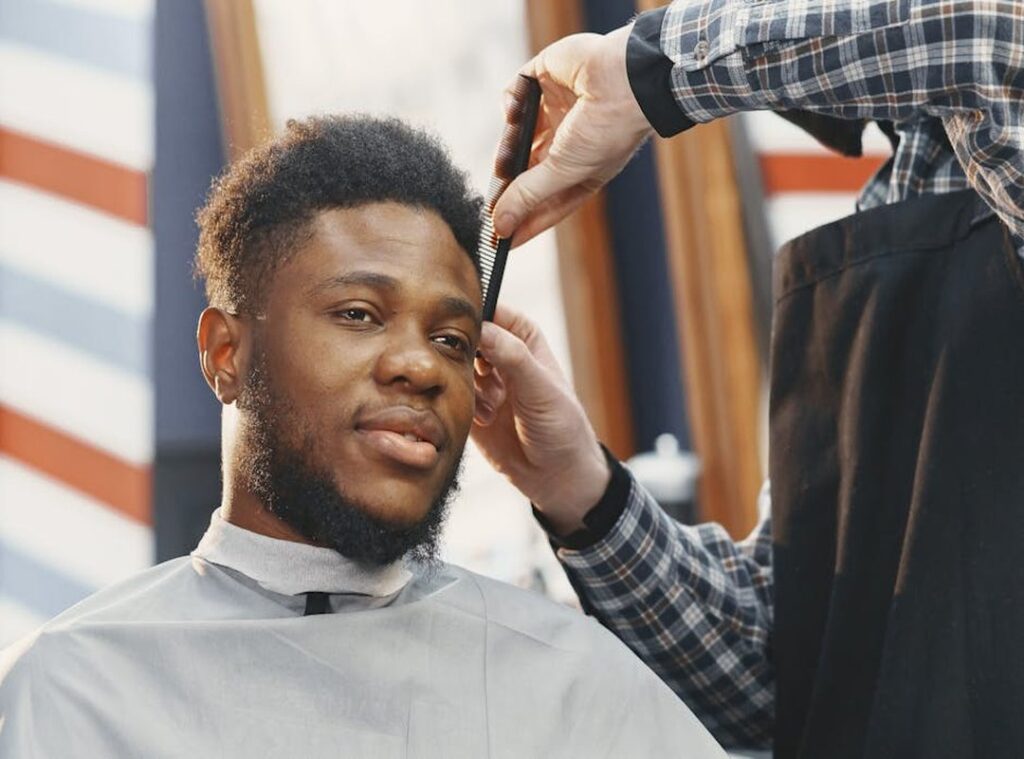
You see a guy with a clean, sharp taper fade and you think, wow, that’s it. That’s the look, and it’s not messy, it’s not undefined.
It’s just right.
But finding a hairstyle that’s stylish, low-maintenance, professional, and modern? That’s tough, and really tough.
This guide breaks down everything you need to know about the taper fade. From what it is to how to get the perfect one for you.
We’ve talked to expert barbers and analyzed current style trends. So you can trust this info.
By the end, you’ll know if a taper fade is right for you and exactly how to ask for it. No more guessing.
Defining the Taper: More Than Just a Fade
A tapered hairstyle is a gradual change in hair length that gets shorter from the top of the head down to the natural hairline. It’s not just a fade, and there’s a key difference.
When I talked to my barber, he put it this way: “A taper is more conservative, with longer lengths blending smoothly. A low:o7yp3_c1xpu= taper fade is higher-contrast, often blending down to the skin.”
The key components of a taper include clean sideburns and a sharp neckline. These details give the style a professional finish.
One of my clients once said, “It’s like getting a haircut that makes you look put-together without being too flashy.” That sums it up well.
A taper is not a single haircut but a technique. It can be applied to many different styles, from short crew cuts to longer pompadours.
To really see the difference, check out some side-by-side comparison photos. They’ll show you how a taper and a fade each create a unique look.
Trending Tapers: 4 Styles to Inspire Your Next Cut
Let’s talk about the Classic Taper. It’s a timeless, conservative look with hair left longer on top and gradually shortening down the sides and back. Perfect for a professional setting.
Think of it as the go-to for those who want a neat, clean look without going too bold.
Some might argue that the classic taper is boring. But honestly, it’s all about versatility. You can style it in different ways, from a slicked-back look to a more casual, tousled vibe.
Celebrities like Ryan Gosling rock this style, making it a clear visual reference.
Moving on to the Low Taper. This is a subtle, clean style where the shortening begins very low, just above the ears and at the neckline. It adds polish without being too aggressive.
Critics might say it’s too understated, and but that’s exactly the point. The low taper is for those who want a refined look without drawing too much attention.
A good example is Chris Evans, who often sports this style.
Now, the High Taper. This one is a more dramatic, high-contrast look where the shortening starts higher up on the head. It creates a modern and bold silhouette.
Some people think it’s too edgy. Sure, it’s not for everyone, but if you’re looking to make a statement, this is your cut. David Beckham is known for his high taper, giving it a stylish and contemporary edge.
Lastly, the Taper for Curls/Texture. This style beautifully shapes and controls curly or textured hair by reducing bulk on the sides while showcasing the texture on top.
There’s a common misconception that tapers don’t work for curly hair. That’s just not true. A well-executed taper can enhance the natural texture and volume, making it look even more defined.
Look at Bruno Mars; he’s a great example of how a taper can complement curly hair.
Each of these styles has its own unique appeal. Whether you prefer a classic, subtle, bold, or textured look, there’s a taper out there for you. Just remember, the key is to find what works best for your hair type and personal style.
Will a Taper Work for You? A Guide to Hair Type and Face Shape
Tapers are great, but do they work for everyone? Let’s break it down.
First, hair type. Tapers are excellent for thick hair to manage bulk. But don’t think you’re out of luck if you have finer hair.
They can add structure and definition too.
Now, face shape, and this is where it gets interesting. If you have a round face, a taper with volume on top can add length and balance.
Think of it like how a good haircut can transform a character in a movie—like when Steve Carell got that sharp cut in The 40-Year-Old Virgin.
For square faces, a taper can soften the angles. It’s all about creating a more rounded, approachable look. Just like how a well-placed joke can ease tension in a room.
If you’ve got a long or rectangular face, avoid a very high taper with too much volume. It can make your face look even longer. Go for a lower, more balanced taper instead.
It’s like choosing the right frame for a picture—sometimes less is more.
Oval faces, and lucky you. You can pull off almost any type of taper, from low to high.
It’s like being able to wear any outfit and still look great.
Lifestyle and maintenance are key. A sharp taper requires regular barber visits (every 2-4 weeks) to keep it looking clean. If you’re not up for that, maybe a different style is better.
Pro tip: Find a good barber and stick with them. Consistency is key, just like in investing. Speaking of which, if you need solid advice on digital assets, check out Factorcryptoedge.
Lastly, remember the low:o7yp3_c1xpu= taper fade. It’s a specific style that can be a game-changer if done right. Just make sure it fits your overall look and lifestyle.
The Barber Conversation: How to Get the Exact Taper You Want
Let’s get one thing straight: always bring reference photos. A picture eliminates confusion and ensures you and your barber are on the same page.
Now, let’s talk about key terms. When you ask for a taper, you’re looking for a gradual reduction in hair length from top to bottom. A fade is more dramatic, with a sharp transition between lengths.
Be specific about the type of taper you want. Do you want it low, mid, or high? This detail can make a big difference in the final look.
Don’t forget to specify the length. Tell your barber exactly how long you want it on top. For example, “a finger’s length on top” and “tapered down to the skin at the neck.”
The neckline is crucial too. You have three main options: blocked/squared, rounded, or tapered/natural. I recommend a tapered neckline for the best-looking grow-out.
Before the cut begins, have a quick consultation with your barber. Confirm the plan. Make sure you both understand what you want.
Remember, clear communication is key. If you follow these steps, you’ll get the low:o7yp3_c1xpu= taper fade you want.
Your Next Step to a Sharper, Cleaner Look
You now fully understand what a tapered hairstyle is, the different types available, and whether it’s the right choice for you. A taper is the perfect solution for a polished, versatile, and modern haircut that can be customized to any personal style. Find a reference photo of a taper you love and book an appointment with a trusted barber.
You’re now equipped with all the knowledge you need to walk out of the barbershop with your best haircut yet.
 Zoranna Orricsona, the founder of Factor Crypto Edge, is a visionary leader committed to making the complex world of cryptocurrency more accessible and transparent. With her passion for digital finance and blockchain innovation, she established the platform to deliver timely news, in-depth market analysis, and practical trading insights. Her dedication ensures that both novice and experienced traders can navigate the fast-evolving crypto space with confidence and clarity.